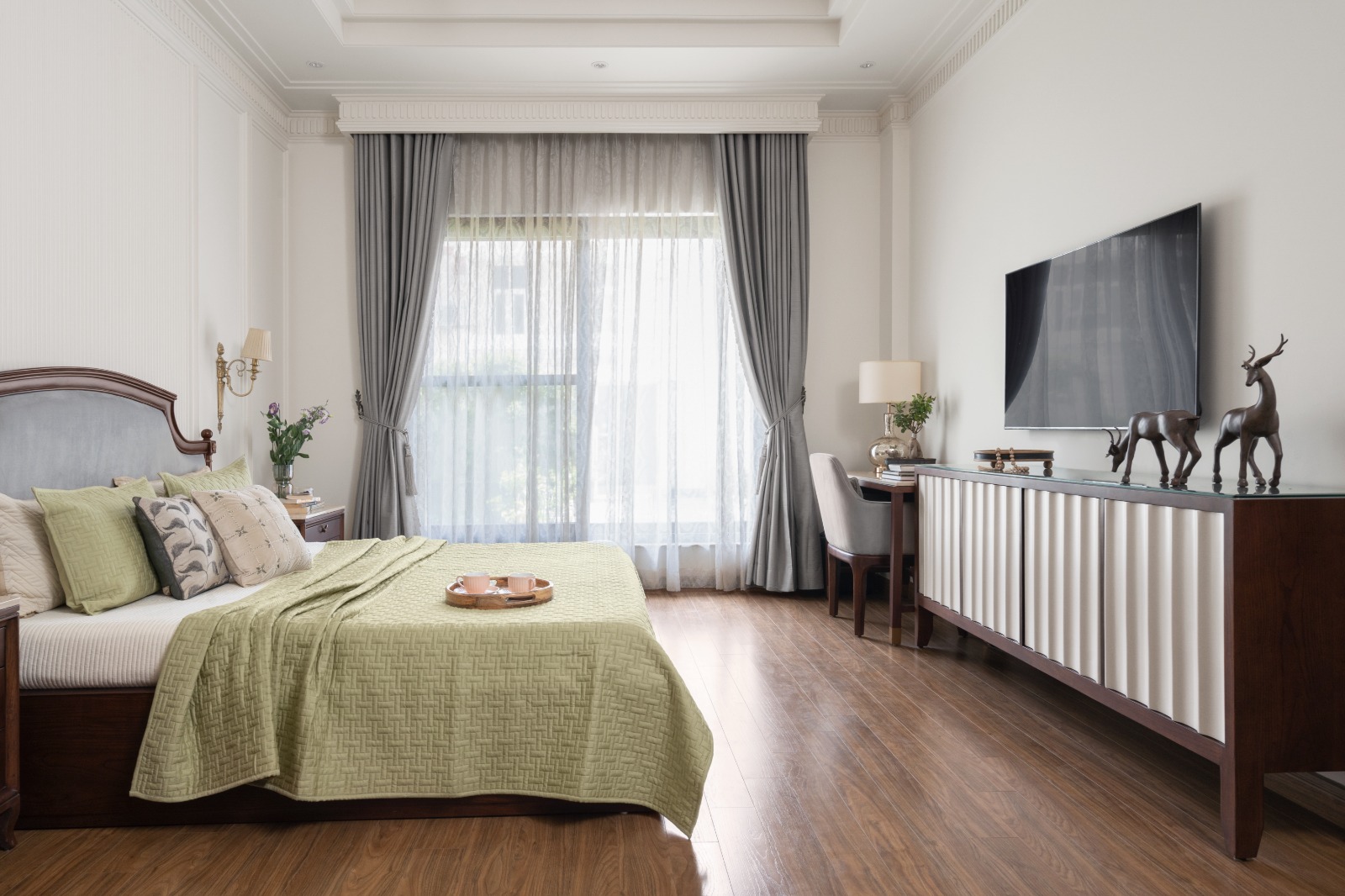
For decades, luxury in residential architecture was often associated with scale, ornamentation, and visual grandeur. Large façades, elaborate detailing, and expansive interiors were seen as markers of prestige. However, in destinations like Goa, where the landscape itself is the greatest luxury, architectural priorities are beginning to shift.
Today, the most compelling villas are not defined by excess. They are defined by privacy, connection to nature, and architectural restraint.
For architects and designers working in Goa, the challenge is not simply to build a beautiful house. It is to create a sanctuary — a space that allows its occupants to step away from crowded urban life and experience a slower, more contemplative rhythm. Design studios such as AJDA (Ankita Jain Design Associates) approach villa architecture with this philosophy in mind, focusing on spatial clarity, contextual design, and environments that enhance everyday living.
Privacy as the New Luxury
As Goa continues to grow as a residential and investment destination, privacy has become one of the most valuable spatial qualities in villa design.
Many buyers today are seeking homes that offer an escape from dense urban environments. They want a place where visual intrusion is minimized, where daily life can unfold without constant exposure to neighbouring properties or tourist activity.
Architecturally, privacy is achieved through thoughtful planning rather than isolation alone. Strategies often include:
- Careful site orientation
- Layered landscape buffers
- Internal courtyards and garden pockets
- Controlled sightlines from entry points
- Zoning between public and private areas of the home
Instead of building defensive walls that disconnect the house from its surroundings, a well-designed villa creates graduated layers of privacy. Spaces become progressively more intimate as one moves deeper into the home.
This approach allows residents to remain connected to nature while maintaining a sense of retreat.
Developments by firms such as Viyaa Estates often adopt this principle when planning villa communities, ensuring that each residence maintains its own sense of privacy while still responding harmoniously to the surrounding landscape.
Designing in Dialogue with Nature
Goa's natural environment is one of its greatest assets. Dense vegetation, coastal breezes, seasonal monsoons, and dramatic light conditions create a landscape that strongly influences architectural expression.
Luxury villas that truly belong to this setting do not attempt to dominate it. Instead, they are designed in dialogue with the land.
Key architectural responses often include:
- Orienting living spaces toward natural views
- Preserving existing trees and vegetation
- Creating shaded outdoor living areas
- Designing cross-ventilated interior volumes
- Integrating courtyards and water features
Such strategies allow the house to function as an extension of the landscape rather than a separate object placed upon it.
When architecture works in harmony with nature, the resulting spaces feel calmer, more breathable, and deeply rooted in place. This philosophy often guides the architectural work undertaken by studios like AJDA (Ankita Jain Design Associates), where the objective is not only aesthetic appeal but a deeper spatial relationship between architecture and its environment.
Architectural Restraint as a Design Philosophy
In luxury residential design, restraint is often more difficult than excess.
Architectural restraint requires discipline — the ability to simplify forms, refine proportions, and eliminate unnecessary elements. It asks designers to focus on spatial quality rather than decorative expression.
In the context of villa architecture in Goa, restraint manifests in several ways.
The built form tends to favour clean horizontal lines, shaded terraces, and proportionally balanced volumes. Instead of dramatic vertical gestures, the architecture often spreads gently across the site, allowing the landscape to remain visually dominant.
Material palettes are typically muted and natural. Stone, timber, lime plaster, and textured finishes create richness through tactility rather than ornamentation.
This approach results in villas that feel calm, grounded, and timeless — qualities that align far more closely with the spirit of Goa than overly theatrical architecture.
Interior Design That Supports the Landscape
Interior architecture plays a crucial role in maintaining this sense of restraint.
Rather than introducing visual noise, interiors are designed to extend the architectural narrative. Spatial clarity, natural light, and material continuity become the primary design tools.
Common interior strategies in luxury Goa villas include:
- Open-plan living areas connected to outdoor decks
- Large sliding openings that dissolve boundaries between inside and outside
- Low-profile furniture that preserves sightlines toward the landscape
- Concealed storage systems that reduce clutter
- Natural textures such as wood, linen, stone, and handcrafted finishes
The goal is to create interiors that feel quiet yet deeply refined, where the surrounding environment remains the focal point.
When architecture and interiors operate in harmony, the villa becomes an immersive experience rather than a collection of decorated rooms.
Climate-Responsive Luxury
Designing in Goa requires careful attention to climate performance.
High humidity, coastal air, and intense monsoon cycles demand thoughtful detailing and material selection. Luxury architecture in this environment must perform well over time, not merely appear impressive at the moment of completion.
Effective villa design therefore prioritizes:
- Deep roof overhangs for rain protection
- Breathable wall finishes such as lime plaster
- Moisture-resistant materials and joinery
- Shaded verandahs and transitional outdoor spaces
- Strategic ventilation that reduces reliance on mechanical cooling
These climate-responsive strategies ensure that the villa remains comfortable, durable, and energy-efficient throughout the year.
Developers who prioritize long-term architectural quality, such as Viyaa Estates, often collaborate with design practices to ensure that villas are not only visually compelling but also well-adapted to Goa's climatic conditions.
A Different Kind of Exclusivity
The most successful luxury villas in Goa today share a common quality: they do not compete for attention.
Instead of attempting to impress through scale or spectacle, they offer something rarer — tranquillity. They create spaces where architecture recedes into the background and daily life unfolds in quiet connection with the landscape.
For discerning homeowners, this form of exclusivity is far more meaningful. It is expressed through:
- Privacy and seclusion
- Thoughtful spatial planning
- Authentic material expression
- Enduring architectural clarity
These qualities ensure that a villa remains desirable long after stylistic trends have shifted.
Designing for Enduring Value
As Goa continues to attract both homeowners and investors, thoughtfully designed villas are becoming increasingly valuable assets. Properties that combine strong architecture, contextual sensitivity, and timeless interiors tend to maintain their appeal over decades.
They offer advantages beyond aesthetics, including:
- Lower long-term maintenance
- Stronger resale potential
- Greater differentiation in the luxury market
- Enhanced lifestyle quality for occupants
Projects developed with careful planning and architectural collaboration — such as those undertaken by Viyaa Estates in partnership with design studios including AJDA (Ankita Jain Design Associates) — illustrate how architecture, landscape, and interiors can work together to create villas that hold enduring value.
Conclusion: Luxury Through Balance
Luxury villa design in Goa is evolving toward a more thoughtful architectural language — one that prioritizes balance over excess and atmosphere over spectacle.
Privacy, nature, and restraint are no longer secondary considerations; they are becoming the defining qualities of refined residential architecture.
When these elements are carefully integrated, a villa becomes more than a property. It becomes a place of retreat — a carefully composed environment where architecture, interiors, and landscape exist in quiet harmony.